Enrichir sa fiche client
.webp)
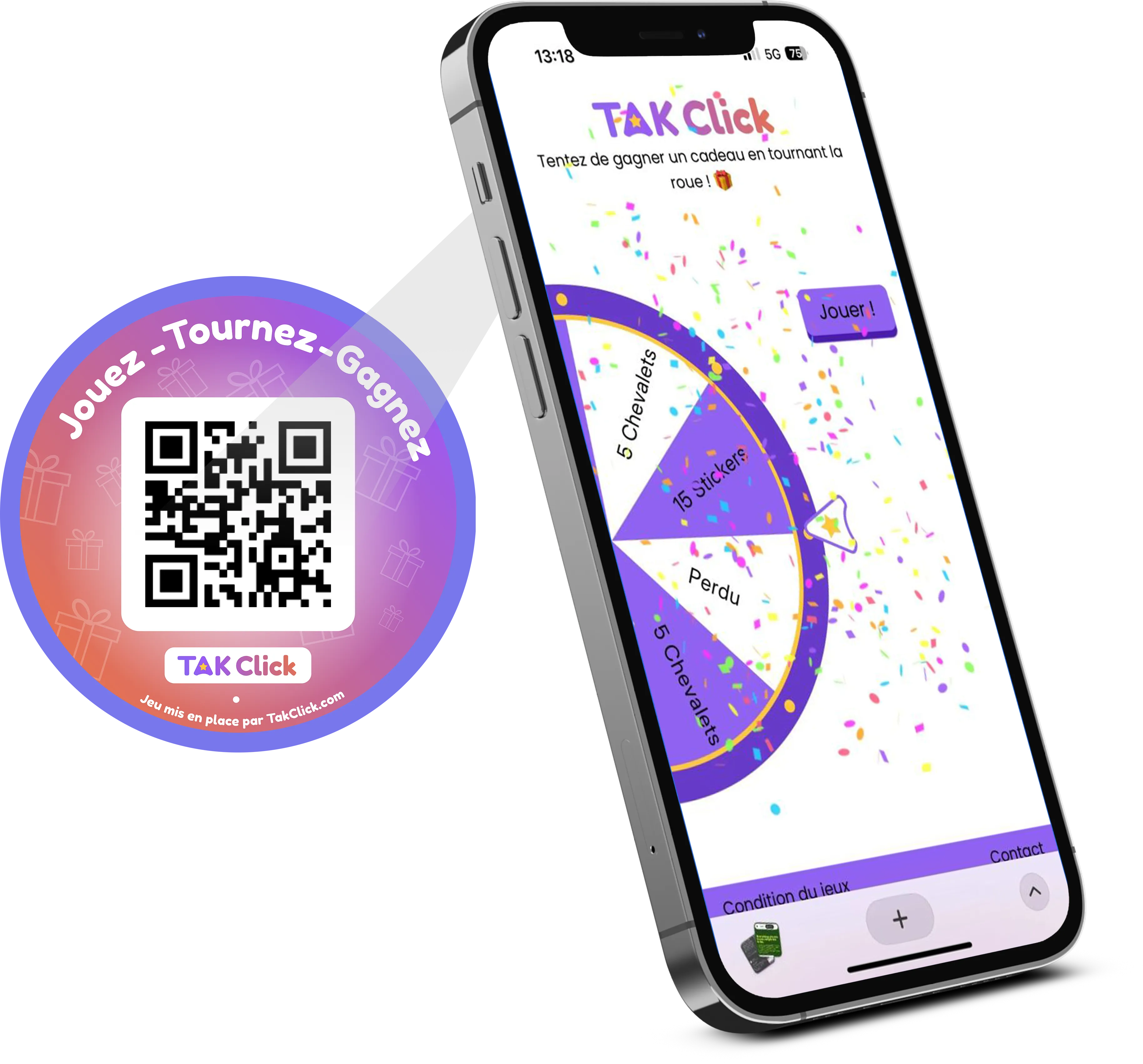
Levier de Personnalisation avec TakClick
Récolter un maximum de données (data) sur vos clients est la clé de voûte d'une stratégie de fidélisation et de marketing personnalisée réussie. TakClick, en proposant une solution de fidélisation par gamification, transforme cette collecte d'informations en une expérience ludique et engageante pour vos clients.
Le Suivi Client : Une Base de Données Complète et Sécurisée
L'objectif premier de TakClick est de vous permettre de créer et d'enrichir une base de données clients complète, essentielle pour personnaliser vos offres et vos campagnes marketing futures.
Personnalisation et Communication Ciblée
Une fiche client enrichie vous donne la possibilité d'aller au-delà de la simple transaction. En connaissant mieux vos clients, vous pouvez :
- Personnaliser vos offres : Proposer des promotions ou des produits qui correspondent réellement à leurs intérêts et à leur historique d'achat.
- Segmenter vos audiences : Envoyer des messages pertinents aux bons groupes de clients.
- Maintenir le lien : Envoyer par la suite des campagnes d'E-mail et de SMS pour rester connecté avec vos clients directement depuis la solution TakClick, en garantissant que le contenu est toujours pertinent.
Traçabilité et Sécurité des Données
TakClick garantit une traçabilité totale des informations. L'utilisation d'identifiants de lots uniques permet une gestion optimisée et sécurisée de votre base de données, vous aidant à respecter les réglementations en vigueur concernant la protection des données.
Collecte Intelligente des Numéros : L'Art de la Gamification
Comment TakClick parvient-il à collecter ces précieuses informations ? En engageant vos clients à fournir leurs coordonnées de manière simple et amusante.
Le Rôle Central du Jeu et du QR Code
L'intégration de la gamification est la force de TakClick. Le client n'est pas sollicité par un formulaire ennuyeux, mais par une interaction ludique souvent déclenchée par un QR Code ou un lien unique.
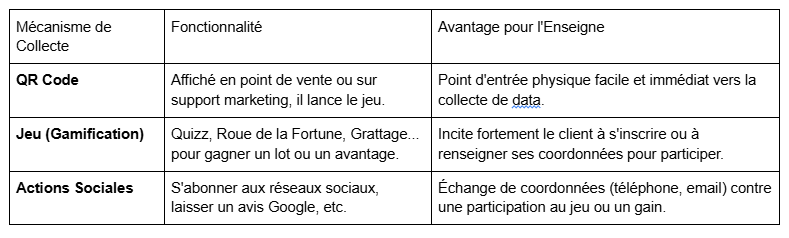
L'Échange de Valeur
L'approche de TakClick repose sur un échange de valeur clair :
- L'enseigne offre : Un moment de divertissement et une chance de gagner un avantage (réduction, produit, etc.).
- Le client fournit : Ses coordonnées (numéro de téléphone, email) et potentiellement des informations comportementales (via les actions sociales ou l'historique de jeu).
Cela enrichit votre base de données de manière ludique et non intrusive, créant une expérience positive pour le client tout en maximisant le taux de collecte.
En exploitant les mécanismes de jeu et la facilité d'accès via le QR Code, TakClick transforme la collecte de données en un atout majeur pour une relation client durable et rentable.